


It does not stop the clock
The question of how long a facelift lasts carries an assumption inside it: that surgery halts ageing.
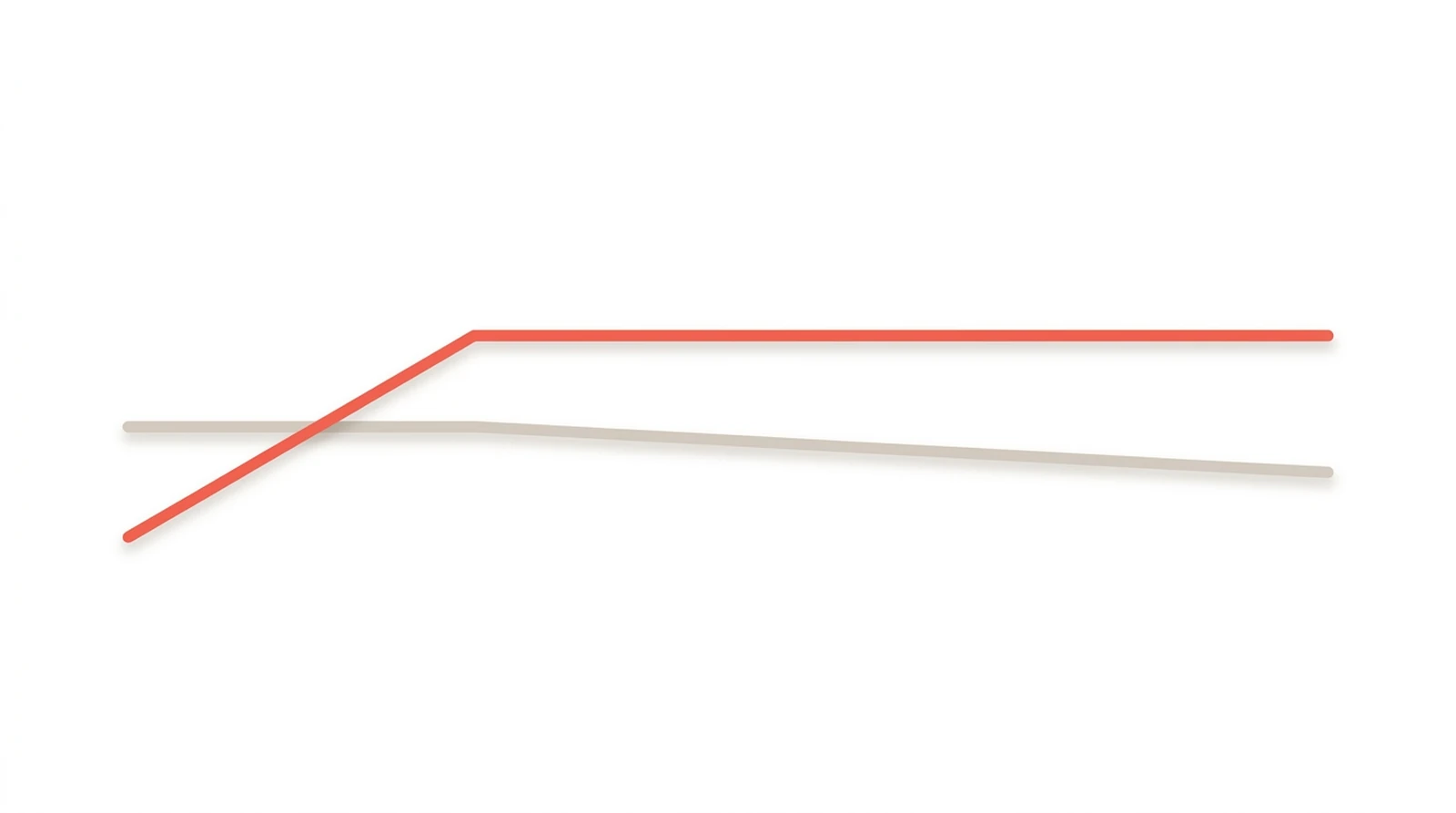
A facelift returns tissue that has descended to where it was. From that point, ageing resumes.
The accurate question is not how long it lasts but how far ahead you remain compared with not having had it.
Being better off than before surgery five years later is a facelift that is holding.
The fair comparison is against the same age unoperated. Compared with the week after surgery, every operation looks like a failure eventually.
Where the expectation sits decides most of the satisfaction.
People spend a long time deciding when. Waiting does not improve the conditions.
Judging the result against photographs from before surgery, rather than against a memory, is what makes the comparison usable.
The week after surgery is not the high point either. Where you are once swelling has resolved is the starting line.
What the research measured
Evidence on longevity was thin for a long time. Much of the discussion ran on impression rather than standardised photographs or objective measurement.
One study, drawing on photographs standardised between 2001 and 2011, assessed fifty primary facelift patients 5.5 years after surgery, combining objective measurements from those photographs with region-specific and overall subjective scoring.
Another follows long-term results while tracking how the technique itself evolved.
A duration quoted without saying how it was measured is hard to use.
Photographs only compare when the conditions match. Different lighting and angles exaggerate the difference.
Subjective scoring and objective measurement do not always agree, which is why both are used.
Any discussion of longevity has to say which technique was used. Different techniques do not compare.
Numbers quoted without a technique, a follow-up interval and a measurement method are marketing rather than evidence.
Studies that follow the same patients for years are scarce, because people stop coming back. That scarcity is why the few that exist carry weight.
What bears on longevity
| Factor | How it acts |
|---|---|
| Layer treated | Skin alone and fixed fascia return at different rates |
| Descent at surgery | More descent lifted leaves more room to descend again |
| Skin elasticity | More elasticity holds the new position longer |
| Weight change | Repeated swings stretch the tissue |
| Smoking and sun | Both lower recovery capacity and elasticity |
What decides the interval
The layer treated comes first. Skin pulled alone and fascia fixed in position do not return at the same rate.
How far the tissue had descended at the time of surgery matters as well. More descent lifted leaves more room to descend again.
Skin quality is next. Elasticity holds the new position longer.
Large weight swings unsettle the result, because volume goes with the fat.
Smoking and sun exposure both lower the tissue’s capacity to recover.
The months of aftercare bear on it too. Where you are once swelling and scars settle is the starting point for everything after.
Genetics play a part as well, and how your family ages is sometimes informative.
Age at surgery bears on it too, through how readily the tissue recovers.
No single factor decides it. Several conditions overlap to produce the interval.
The quality of the tissue at the time of surgery is the factor least discussed and among the most influential.
Time spent on aftercare belongs here too. The first few months carry into the following years.
Areas move at different rates
The jawline and neck feel gravity most and descend first.
The midface loses volume alongside descent, so it reads as hollowing rather than sagging.
The eye area follows its own course. A facelift does not settle the eyelids.
So what bothers you a few years on is often not what brought you in.
Which is why a revision rarely repeats the original scope. Often only what needs it is revisited.
The eye area and forehead are planned separately, sometimes alongside the lift.
Which is why people often describe a facelift as holding well in one area and less so in another. Both can be true at once.
Which is why revision divides into redoing the whole thing and revisiting a part of it.
What TheLINE explains about longevity
We set out which layer the operation will treat and what kind of hold that produces.
We say up front how much can be expected given your age and skin.
Where volume loss is part of the picture, restoring volume is considered alongside. Lifting alone does not resolve it.
We also explain that aftercare and daily habits bear on the interval.
There is a base price per area. Because the consultation reads the whole line and proposes what has to be treated, the final figure is usually settled afterwards.
Agree to the proposal and that is the operation performed.
What helps it hold
Keeping weight reasonably steady. Repeated swings stretch tissue.
Sun protection, which bears directly on skin elasticity.
Not smoking, which bears on tissue recovery.
Early aftercare persists in the result too. Where you are once swelling and scars settle is the starting point for everything after.
Sleep and stress leave their marks on skin too. Not direct factors, but they accumulate.
Not repeating aggressive diets belongs here as well. Facial volume goes first.
None of these extend it dramatically. They stop it being shortened unnecessarily.
Not disrupting things does more than any particular regimen. Abrupt change is the heaviest load.
When it comes up again
When the area that first bothered you descends again. That point differs enormously between people.
Partial descent is sometimes supplemented with a thread lift or similar.
Where lost volume is the main change, filling is the right answer.
Sometimes the whole lift is revisited, and that is harder than the first time.
What bothers you is the measure, not what someone else thinks you need.
Continuing follow-up means noticing change early, and there are more options at that point.
Coming in to ask does not commit you to anything. Establishing where you are has its own value.
Revision is a different operation
The tissue has already moved once and scar is present, which makes dissection harder.
Incisions follow the existing scars as a matter of principle.
The distance available to lift is often smaller than it was.
Which is why how far the first operation went shapes the options later.
Records from the first operation make the plan more accurate. If it was done elsewhere, request them.
The first operation is not planned around a revision. The possibility is simply left open.
Which is why where you have the first operation carries forward. The record and the technique shape what is possible next.
What this article does not settle
Individual variation is wide. An average from a study is not your interval.
A facelift raises descended tissue; skin texture and pigment are separate subjects.
No single operation holds back everything that changes with age.
This is a general account; your own situation has to be examined.
Over-tightening at the first operation to buy longevity is not advised. It reads as unnatural.
Treat any recommendation that leans on a longevity figure with some caution.
Frequently asked questions
How many years is usual?
A single number does not answer it. One study assessing patients 5.5 years after surgery found them still better off than before it. Variation is wide, so an average is not your interval.
Does everything return to how it was?
Not to the pre-operative state. Ageing resumes from the lifted position, and a difference remains against the same age unoperated.
When is revision done?
There is no set point. It is considered when the area that concerned you descends again. Partial change is sometimes handled another way.
Is there anything I can do to make it last?
Steady weight, sun protection and not smoking all bear on it. Early aftercare sets the starting point for everything that follows.
What does TheLINE explain about this?
Which layer will be treated and what kind of hold that produces, and where volume loss is present, how restoring volume fits alongside.