



Severe sagging
For patients with severe facial sagging due to aging who want a definite lifting effect.


TheLINE
Beyond the SMAS, down to the retaining ligaments
Faster Recovery, Faster Rejuvenation
Deep Plane Facelift
A premium lift that goes beyond the limits of a conventional facelift, lifting every layer responsible for facial sagging and supporting regeneration with SVF extracted from your own body
SVF Deep Plane Facelift
TheLINE lifts every sagging tissue layer together, not the skin alone.

“Sagging” does not mean that only the visible skin droops. It refers to the skin, the fat layer beneath it and the SMAS layer all loosening, while weakened muscle strength leaves even the facial expression muscles slack.
Rather than only plicating and pulling the SMAS layer, it dissects down to the deep plane and releases the retaining ligaments so that every layer responsible for facial sagging is lifted together.
Applying fresh SVF harvested from your own body to the surgical area acts as a booster that supports regeneration. Tissue lumping is reduced, and it helps skin radiance and elasticity recover.
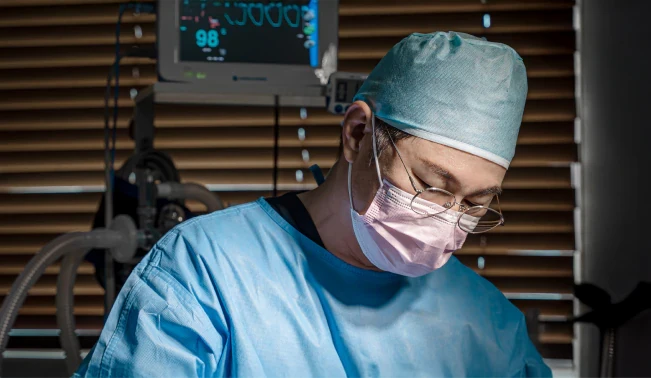
Dr. Yoosuk Chung, Chief Director of TheLINE and a board-certified plastic surgeon with 32 years of experience, performs the surgery personally. Experience from more than 1,000 facelift surgeries is reflected directly in the surgical plan and in judging the depth of dissection.
Recommendation Target
If you want sagging tissue lifted decisively, take a look at the list below.
For patients with severe facial sagging due to aging who want a definite lifting effect.
For significant mid-to-lower face sagging such as jowls, along with drooping mouth corners.
For skin that looks uneven or bumpy and has lost elasticity due to age-related changes.
For patients whose SMAS facelift produced insufficient results and who need revision surgery.
Skin vs SMAS vs Deep Plane
A different depth of dissection means a different set of layers can be lifted.
SKIN LIFT
An incision is made along the natural crease around the ear and only the skin layer is lifted. Operation time is about 2 hours, so the procedure is simple and recovery is quick, but the result is closer to a temporary improvement of skin sagging.
SMAS LIFT
The sagging SMAS is plicated and lifted in selected areas. Operation time is 2-4 hours and it is effective for mild to moderate sagging, but the degree of improvement in nasolabial folds, jowls and overall sagging is limited.
SVF DEEP PLANE LIFT
The retaining ligaments are released so that all tissue layers are lifted, and SVF is applied to support skin regeneration as well. Operation time is 4-8 hours. The more severe the sagging, the greater the change, and it works across the whole face including the facial expression muscles, with improvement in nasolabial folds, jowls and neck sagging in particular to be expected.
SMAS Lift vs. Deep Plane Facelift
Choosing between a SMAS lift and a deep plane facelift comes down to how deep the dissection goes — and that difference affects both the result and the recovery.
| Factor | SMAS Lift | Deep Plane Facelift |
|---|---|---|
| Dissection plane | Skin and SMAS are separated and lifted independently | Skin, fat, and fascia are mobilized together as one composite layer, below the SMAS |
| Midface rejuvenation | Improvement in the midface tends to be more limited | One comparative study reported superior midface rejuvenation with the deep plane technique |
| Reported patient satisfaction | 87.8% | 94.4% |
| Surgical approach | More conservative tissue manipulation | Requires releasing the retaining ligaments and a detailed understanding of facial nerve anatomy |
* Comparison based on a 2025 systematic review and meta-analysis of 21 studies (2,896 patients), published in Annals of Plastic Surgery. Source: Vayalapra S, et al. Comparing the Safety and Efficacy of SMAS and Deep Plane Facelift Techniques: A Systematic Review and Meta-analysis. Ann Plast Surg. 2025. (View on PubMed) The review notes that direct comparative data between the two techniques remains limited, and that technique selection should be individualized based on each patient's anatomy. Results vary by individual.
Deep Plane Dissection
Sub-SMAS dissection, release of the retaining ligaments and SVF application all follow within a single surgery.
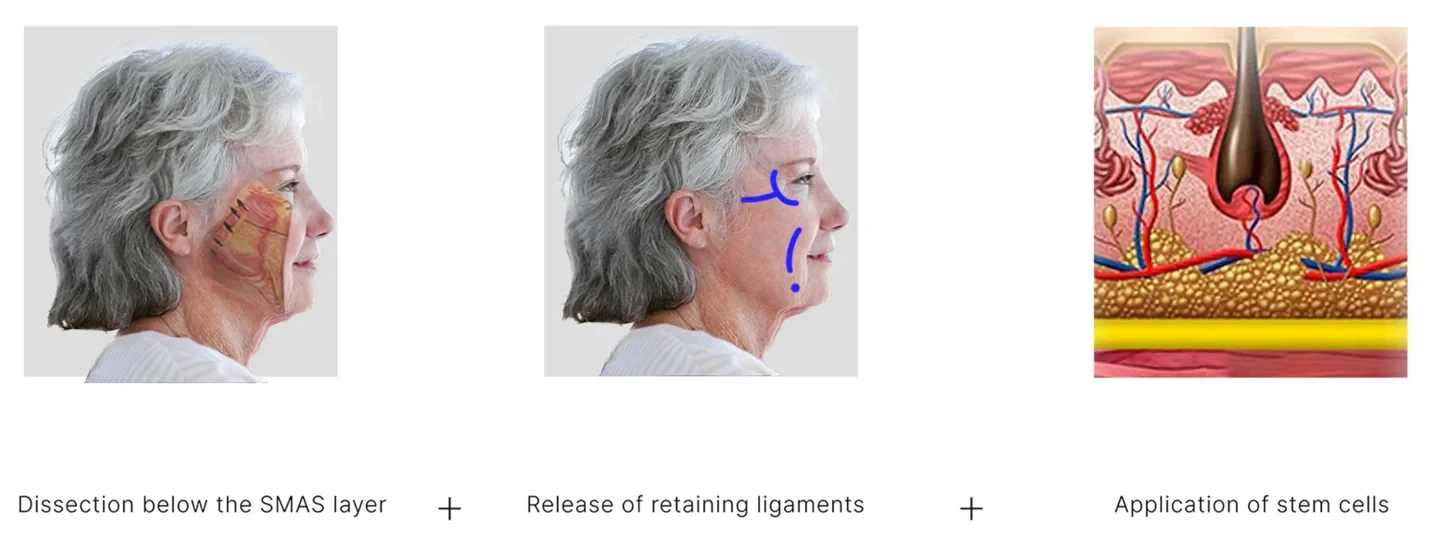
* Dissection down to the deep plane is possible only when the retaining ligament tissue is released so that the SMAS can move freely and be lifted.
TheLINE Deep Plane Facelift
Lifting and regeneration are planned together.
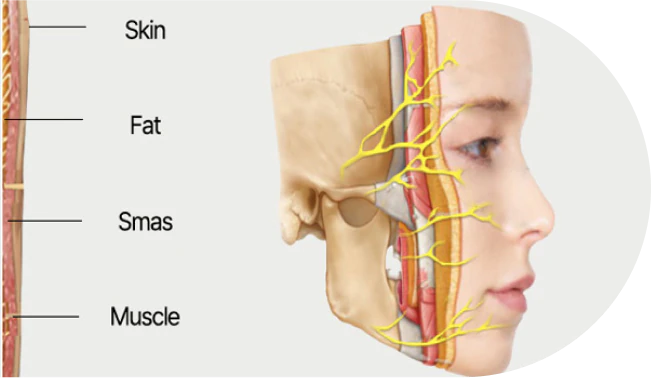
LIGAMENT RELEASE
The skin, fat layer, SMAS and facial expression muscles - every layer responsible for sagging - are released from the retaining ligaments and lifted together. Dissection down to the deep plane is possible only when the SMAS can move freely.

TENSION FREE SUTURE
When precise dissection has released the tissue sufficiently, no tension is placed on the skin when it is closed after lifting. Reducing the pull on the sutured area eases the burden of a scar widening.
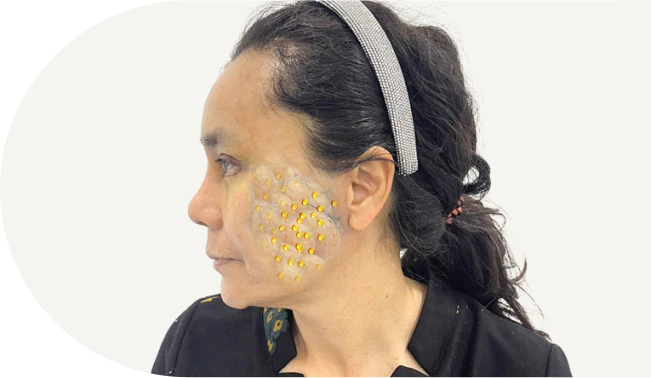
SVF REGENERATION
Applying fresh SVF harvested from your own body to the surgical area acts as a booster that supports regeneration. Tissue lumping is reduced and skin radiance and elasticity are helped to recover, and combining consistent treatment after surgery also helps with wrinkle care.
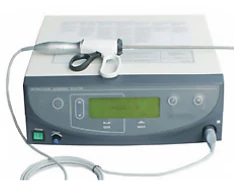
Safety & Equipment
Three things prepared in advance: testing, equipment and the surgeon.
Frequently Asked Questions
Answers to common questions about a facelift for foreigners in Korea.
A deep plane facelift is a technique that releases the retaining ligaments beneath the SMAS layer, allowing the skin, fat, and fascia to be lifted together as one unit. This differs from a standard SMAS lift, which separates and lifts the skin and SMAS layer independently.
The main difference is dissection depth. A SMAS lift plicates or trims the SMAS layer and pulls it in selected areas. A deep plane facelift dissects below the SMAS and releases the retaining ligaments, so the deeper tissue layers move together rather than being pulled from the surface. A 2025 meta-analysis found higher reported patient satisfaction with deep plane techniques (94.4% vs. 87.8%), along with a comparable safety profile.
Patients with significant midface, jowl, or neck sagging — or those who had limited results from a prior SMAS facelift — are typically considered good candidates. The appropriate technique differs by individual anatomy and is determined at consultation.
Facelift recovery time is typically around one week before returning to light activity, though initial swelling can take longer to fully settle than with a SMAS lift. Because the lifting occurs at the SMAS and deeper layers rather than the skin itself, most patients are advised mainly to avoid excessive facial movement for the first few days. Individual recovery time will vary.
Most international patients typically plan for a pre-operative consultation day, the surgery day, and enough time afterward for the initial follow-up and suture check before flying home. Your care coordinator will confirm an exact itinerary once your surgical plan is set.
A deep plane facelift at TheLINE can be performed under IV sedation or general anesthesia, depending on the patient's medical history and the extent of the procedure. This is confirmed during your pre-operative consultation.
Incisions typically follow the natural crease around the ear and the hairline. A tension-free suturing technique is used so that minimal pull is placed on the skin at closure, which is intended to reduce the risk of a widened scar. Results vary by individual.
A deep plane facelift repositions the SMAS and deeper connective tissue, not just the skin. Long-term outcomes have been reported, but current research is not sufficient to conclude definitively that one facelift technique lasts longer than another. Actual longevity depends on skin elasticity, age, lifestyle, and individual anatomy.
As with any facelift technique, possible risks include bleeding, hematoma, infection, and temporary nerve-related numbness or weakness. Temporary nerve symptoms often resolve over time, but the type and course of complications can vary by individual. Your surgeon will review your individual risk profile and pre-operative precautions during consultation.
Yes. A deep plane facelift is commonly combined with neck lifting and/or fat grafting to address volume loss, depending on the patient's anatomy and goals. This is discussed and planned individually during consultation.
Cost depends on the extent of the procedure, whether it is combined with other treatments such as neck lifting or fat grafting, and the individual surgical plan. An exact quote is provided after an in-person or online consultation.
Yes. TheLINE provides English-language consultation for international patients, including online consultation prior to travel. Contact our team to arrange a consultation time.
Surgery Information
Operation time, anesthesia and recovery for the deep plane facelift.
Recovery & Aftercare
A general guide to aftercare in the weeks following a deep plane facelift.
| Timing | Guidance |
|---|---|
| Day of surgery – Day 3 | Cold compress only (never hot). Wrap the provided pack in a thin towel; apply for 10–15 minutes every 2–3 hours. Do not rub the area. |
| Day 3 | Tape is typically removed. Partial facial washing is possible, excluding the incision area. |
| Day 7 onward | Full facial washing is typically possible. Wash gently so the incision area is not pulled; after washing, gently pat the area dry with a clean towel, apply ointment to the incision area, and wear the provided compression band/strap. |
| Around suture removal (1–2 weeks) | Most patients can return to work and light social activity around this point, and light makeup can typically be started shortly after suture removal, around 1–2 weeks (usually 7–10 days) after surgery. |
| First 2 weeks | Avoid putting strain on the face or body, such as lifting heavy objects. |
| First month | Avoid touching or rubbing the surgical area. Avoid tough or hard foods and opening the mouth too wide. Avoid sauna, hot compresses, massage, strenuous exercise, smoking, and alcohol. |
| 3–6 months | Swelling typically subsides gradually over this period. |
| After 3 months | Hair coloring and perming are typically possible from this point onward. |
Keep the surgical area elevated above heart level (slightly raise the pillow, sleep face-up); avoid leaning the head forward.
May resolve at different rates on each side, which can look temporarily asymmetric, and may extend beyond the surgical site itself. This typically improves naturally over time.
Bruising typically lasts 1–2 weeks depending on individual skin type. Apply sunscreen to bruised areas, as direct sun exposure on bruised skin can lead to pigmentation. If the medical tape causes significant itching, this may indicate an allergic reaction — contact the clinic.
* This timeline is a general guide. Individual recovery varies, and your care team will confirm a specific schedule for your case.
Before & After
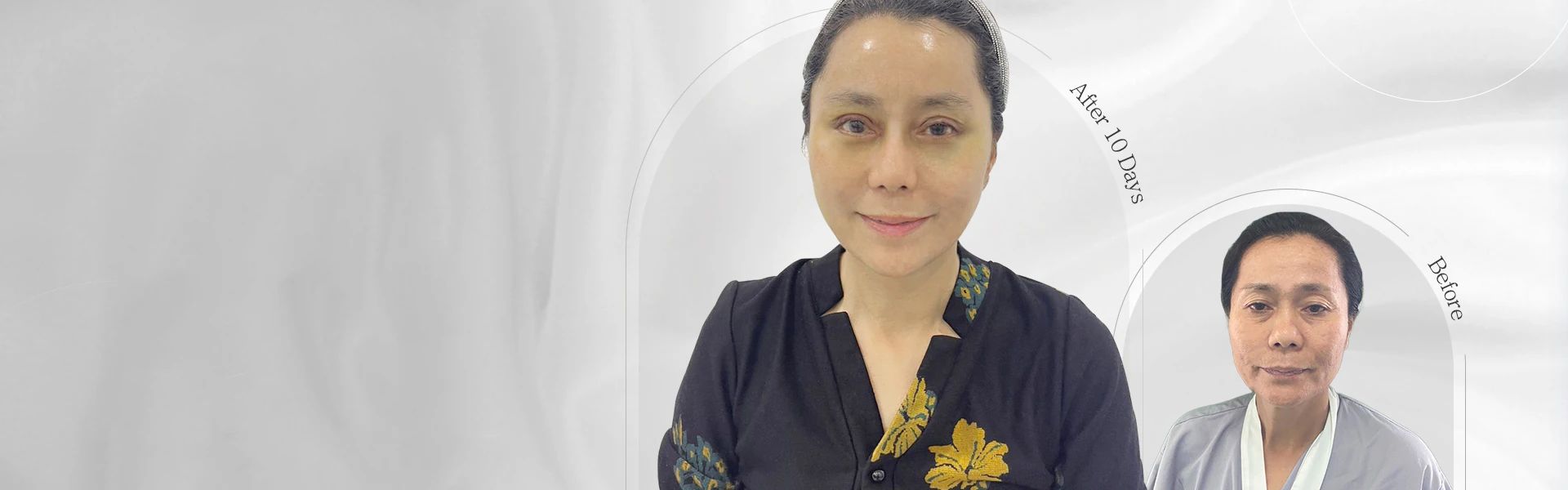
Before surgery and 1 month after the deep plane facelift, compared side by side.
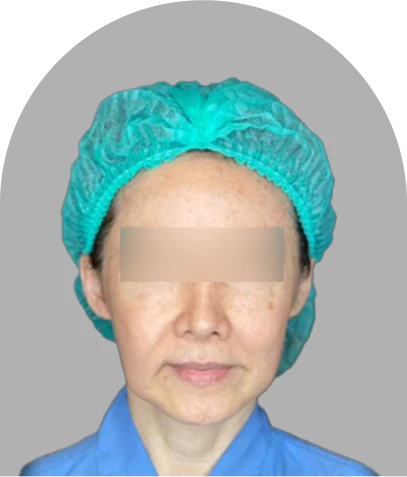
Before surgery - mid-to-lower face sagging has progressed.
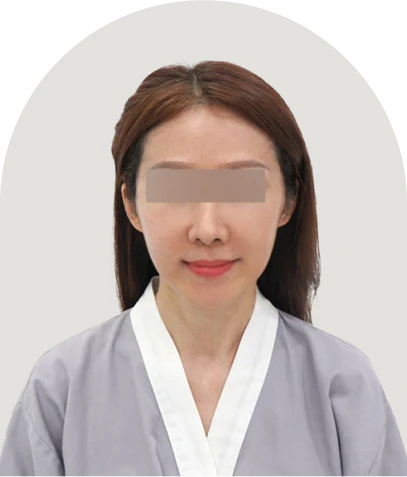
1 month after surgery - the progress after the sagging tissue was lifted.
* Before-and-after results may vary from person to person. Unexpected side effects such as inflammation, bleeding or infection may occur, so caution is required.
Before & After
Drag the handle in the middle left and right to compare before and after surgery.
CASE 01 · Front view
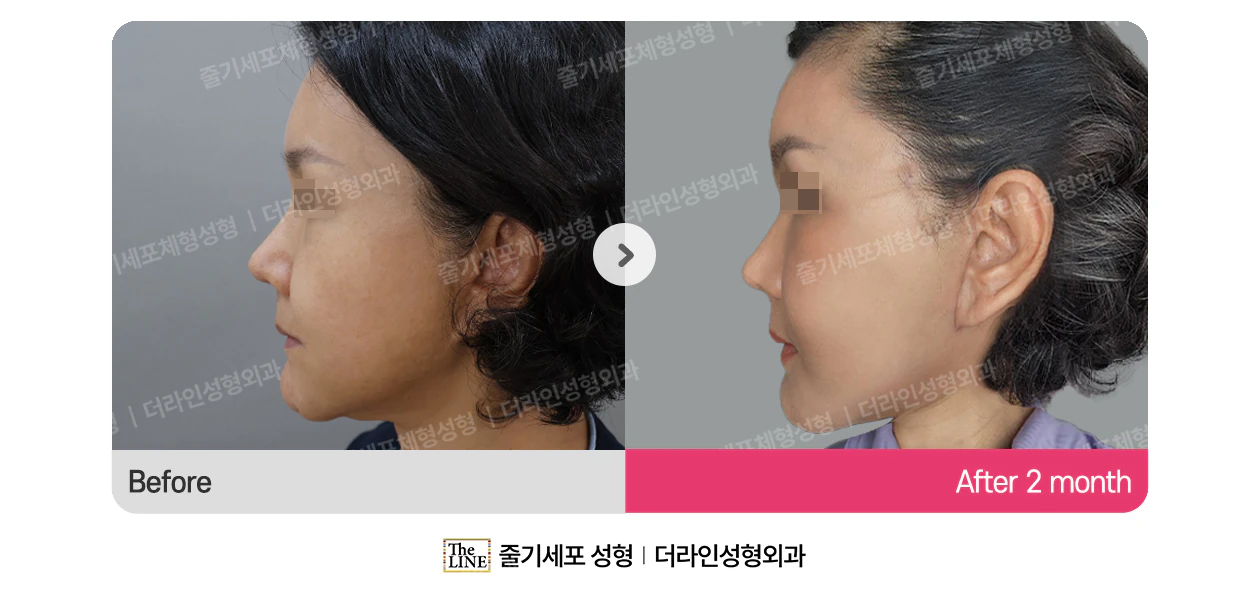
CASE 02 · Front view

CASE 03 · Front view

Unexpected side effects such as inflammation, bleeding or infection may occur, and the degree may vary from person to person, so caution is required.
In compliance with the Korean Medical Service Act, TheLINE Plastic Surgery Clinic makes before-and-after surgery photos viewable after login.
Related Treatments
Related Articles
Why Patients Trust TheLINE
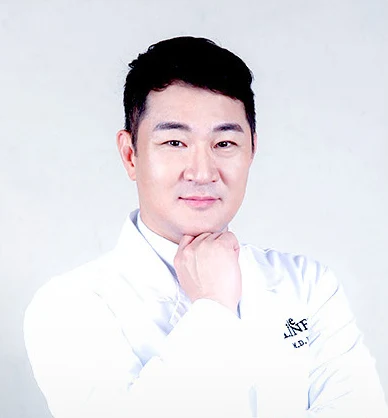
TheLINE has maintained an accident-free record since its founding in 2007, with Chief Director Dr. Yoosuk Chung personally performing more than 50,000 facial and body procedures over his 32-year career.
TheLINE designs the lifting technique and intensity based on each patient's skin condition and bone structure, taking into account differences in skin elasticity and sagging patterns that can vary between Western and Asian patients.
For International Patients
The exact length of stay depends on the extent of surgery and individual recovery speed, but patients are generally advised to remain in Seoul until suture removal (typically about 1–2 weeks after surgery). This is when the first follow-up check and suture removal take place, after which light social activity and flight readiness can be confirmed together with your care team. An exact schedule is determined individually during consultation based on your surgical plan.
TheLINE is located on Garosu-gil in Sinsa-dong, Gangnam-gu, Seoul.
Address: 4-6F, Dongnam Bldg, 65 Garosu-gil, Gangnam-gu, Seoul, Republic of Korea
Airport Limousine Bus: Take Bus #6009 from Terminal 1 or 2 → Get off at 'Sinsa Station / Pureun Savings Bank' stop (approx. 60–80 min) → Walk down the main Garosu-gil street for about 5 minutes.
Taxi: Convenient if you have heavy luggage (approx. 60–70 min). Please show the driver: "기사님, 강남구 가로수길 65 (동남빌딩)으로 가주세요." (Driver, please take me to Dongnam Bldg, 65 Garosu-gil, Gangnam-gu.)
Subway: Take the Airport Railroad (AREX) → Transfer to Line 9 (Express) at Gimpo Airport Station → Transfer to Line 3 at Express Bus Terminal Station → Get off at Sinsa Station (Exit 8) and walk about 5 minutes.
If you're planning to fly after surgery, the following may help:
Cabin pressure and swelling: Changes in cabin pressure can generally affect swelling, so avoid lifting heavy luggage or bending your head down. Keeping your head elevated above your heart while resting or sleeping can help.
DVT prevention: During long flights, it's recommended to walk lightly or do ankle stretches every 1–2 hours.
Items to avoid: Avoid tight-fitting glasses or over-ear headphones that press on the surgical area (around the ears), and stay well hydrated in the dry cabin environment.
When it's safe to fly: The exact timing depends on your individual recovery, so please confirm with your care team during consultation.
4-6F, 65 Garosu-gil, Gangnam-gu, Seoul, Korea




※ For revision surgery, please also select the 'Revision' option.
Your selection