



Infusion
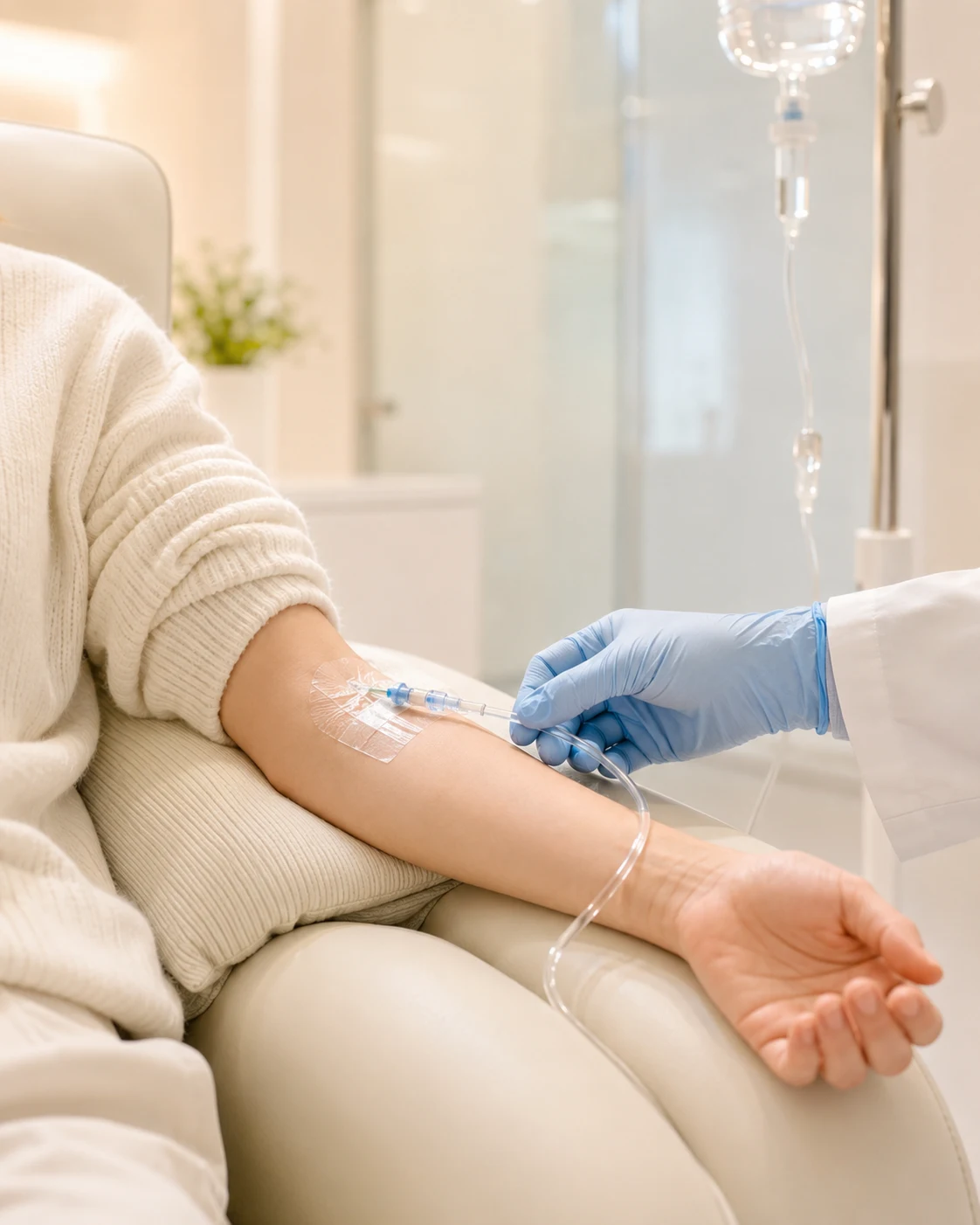
Once the cells have been cultured and passed quality checks, they are returned to your bloodstream through an IV.


Autologous NK Cell IV
Before it shows on your skin, age settles into your immunity.
One blood draw, two weeks of preparation, three infusions.

About the program
NK Cell IV uses natural killer cells from your own blood. As part of TheLINE’s research program, the cells are grown and checked at a licensed facility for about two weeks, then given in three IV infusions, two weeks apart.
TheLINE Plastic Surgery is on Garosu-gil in Sinsa-dong, Gangnam, Seoul. A single blood draw prepares all three doses, and after the first course the program is reviewed once a year.
The basics
What NK cells do and how they are collected and prepared.
Natural killer (NK) cells are lymphocytes, a type of white blood cell. They belong to the innate immune system and recognize and respond to virus-infected or abnormal cells.
We start with a blood draw from your arm. NK cells are separated from the sample and grown in a laboratory before being returned through an IV. No fat harvesting or surgical incision is needed.
The laboratory separates the NK cells from your blood and grows them to increase their number. This process, known as cell culture, takes about two weeks along with the quality checks required before infusion.
The types of NK cells in the blood and the way they function can change with age. Scientists study these changes as part of immune aging, or immunosenescence. The long-term effects of NK cell infusions are still being investigated.
The age-related decline in NK cell function, part of what is known as immunosenescence, is well documented, and studies have reported changes in blood markers of aging after infusions of a person’s own NK cells. Results and how they feel vary from person to person.
It is an autologous approach: cells taken from your blood are returned to you. We do not use donor cells or other outside materials.
How NK cells work
NK cells recognize and respond to signals from other cells.
Once the cells have been cultured and passed quality checks, they are returned to your bloodstream through an IV.

NK cells respond to signals on the surfaces of other cells. They can recognize the loss of markers normally found on healthy cells.

NK cells release proteins such as perforin and granzymes in response to target cells. They also send signals to other immune cells.
Senescent cells & NK cells
A closer look at why senescent cells build up, and the role NK cells play.
With age, senescent cells—cells that have stopped dividing—accumulate in tissues. Rather than being cleared, they keep releasing inflammatory factors (SASP), which can contribute to chronic, body-wide inflammation and declining function.
Healthy NK cells recognize signals displayed by senescent cells (such as NKG2D ligands) and selectively remove them. As we age, NK cell numbers and function decline, allowing senescent cells to build up in the body.
NK cells obtained from your own blood are expanded thousands of times and activated, then infused at regular intervals. The aim is to restore weakened immune surveillance and reduce senescent cells and inflammatory factors. Long-term effects in humans are still being studied.
Immunosenescence
You can see your skin age in the mirror, but your immune system ages out of sight. Researchers call the age-related changes in NK cell composition and function “NK cell immunosenescence.” The number of NK cells may hold steady or even rise, but the most typical change is that each cell becomes less able to attack abnormal cells.
The research
Small studies have reported changes in immune cells. Here is what they found and what those findings mean.

Of 37 participants, 32 received their own cultured NK cells and five received saline. Levels of some markers linked to T-cell aging and exhaustion fell over four weeks. The study was small and measured changes in blood markers; it did not establish long-term health benefits.
Researchers reported lower levels of two markers of cell aging, p16 and β-galactosidase, in immune cells in the blood after NK cell infusion. The study involved five adults and had no control group.
An 11-year study of 3,625 people found fewer cancer cases among those with higher natural NK cell activity. It observed a link with immune activity; it did not test whether NK cell infusions prevent cancer.
※ These are small international studies and do not represent results of TheLINE’s program. Results vary by individual and are not guaranteed.
Immune health
Your medical history and current health guide the discussion. This program does not replace treatment for an existing condition.

Innate immunity
NK cells are part of your innate immune defenses. We review your medical history and current health before discussing NK Cell IV.

Research
Researchers are studying how NK cell function changes with age and whether infusions affect markers of immune-cell aging.

Senescent cells
Scientists are investigating how NK cells interact with senescent cells. An anti-aging benefit in people has not been established.

Appointments
The initial course involves one blood draw and three infusions. We review your health each year before deciding whether to repeat it.
Comparing the options
These programs use different cells and follow different preparation and treatment schedules.
| Comparison | NK Cell IV | Stem Cell IV |
|---|---|---|
| Cell type | NK cells isolated and cultured from your own blood | SVF containing stem cells, or blood-derived components |
| Cell role | Recognizing infected or abnormal cells | Supporting tissue recovery and regeneration |
| Collection | A blood draw | Your own fat or blood, depending on the program |
| Preparation | About two weeks of culture and quality checks at a specialized facility | Same-day separation and purification at the clinic |
| Schedule | Three infusions two weeks apart, with a health review each year | About eight weeks apart, adjusted after consultation |
| Main focus | Immune health | Recovery and regeneration |
Your appointments
The course takes about six weeks from the blood draw to the third infusion.
We then review your health each year before deciding whether to repeat it.

Step 01 · Before treatment
Your doctor reviews your medical history, medications and screening results with you to decide whether the program is appropriate.

Step 02 · Week 0
A single blood draw from your arm provides the cells for the standard three-infusion course.

Step 03 · About two weeks
Your NK cells are isolated and grown in culture at a specialized cell processing facility. Preparation and quality checks take about two weeks.

Step 04 · Week 2
The prepared NK cells are given by IV. Allow about an hour for the infusion and a check before you go home.

Step 05 · Weeks 4 and 6
You return for two more infusions at two-week intervals. We check your health before each session.

Step 06 · One year later
A year later, we review your health to decide whether to repeat the course. If you continue, you have another blood draw about two weeks before the next course of three infusions.
Your consultation
We start with your health and the questions that brought you to the clinic.
Frequent travel or late working hours can make appointments difficult. At your consultation, we can discuss the blood draw and infusion schedule.
If you have noticed a change in how you feel, speak with a doctor about possible causes before considering an NK cell program.
You and your parent can attend a consultation together to review their medical history and medications, and discuss whether the program is appropriate.
If you have had SVF or another cell-based treatment, we can explain how NK Cell IV differs and whether combining the programs is appropriate.
Before you choose
Where and how the cells are prepared differs from clinic to clinic. When choosing a clinic, check these three things.
CHECK 01
You should be able to confirm its designation by Korea’s Ministry of Health and Welfare and its designation number.
CHECK 02
Cells for infusion may only be cultured at licensed facilities.
CHECK 03
The clinic should be able to tell you which facility the cells come from and what quality checks they go through.
About TheLINE
TheLINE meets all three. Here are the clinic, the laboratory preparing your cells and the experience behind the program.
Korea’s Ministry of Health and Welfare designated TheLINE an Advanced Regenerative Medicine Institution on August 21, 2026. Designation No. 재생-1-0141.
Your NK cells are prepared at a specialized facility licensed by Korea’s Ministry of Food and Drug Safety (MFDS). The facility handles cell isolation, culture and quality checks.
Our own cell research laboratory is on the clinic’s fifth floor, where we study and develop cell-based programs.
Our research and development department has its own staff and facilities. It was formally recognized in 2023 under registration No. 2023156102.
We have worked with fat and SVF since 2007. We draw on that experience when developing cell-based programs.
We explain where your cells are prepared, how they are checked and when each infusion is scheduled.
At a glance
※ This program is under research and development, and its schedule and methods may change. Possible side effects include mild fever, chills, fatigue, bruising at the IV site and allergic reactions. Responses vary from person to person. Your doctor will review your health and screening results before you proceed.
FAQ
They come from your own blood. After a blood draw, the NK cells are separated and grown in culture. No fat harvesting or incisions are needed. Using your own cells is known as an autologous approach.
Cell preparation and quality checks take about two weeks after the blood draw. We schedule your first infusion once we have reviewed the results and your health.
The standard course involves one blood draw and three infusions. If the blood draw is in week 0, infusions are planned for weeks 2, 4 and 6. Additional checks may be needed depending on your test results and how cell preparation progresses.
We review your health each year to decide whether to repeat the course. If you go ahead, you have another blood draw about two weeks before the first of three infusions, again spaced two weeks apart.
Your cells are grown in culture at a specialized facility licensed by Korea’s Ministry of Food and Drug Safety (MFDS). At your consultation, we can explain what the facility is licensed to do and how it prepares and checks the cells.
The first thing to check is where the cells are prepared. TheLINE works with a specialized MFDS-licensed cell processing facility and explains the culture and quality-check process during your consultation.
Allow about an hour for the infusion and the check afterward. You may need more time if you have tests that day or need further assessment.
You can usually go home and return to everyday activities after the post-infusion check, as long as you are well. Some people develop a mild fever or feel tired afterward. Follow your doctor’s advice about rest and activity.
They use different cells and preparation methods. Your doctor can discuss whether a combination is appropriate and how to schedule it, taking into account your health, other treatments and what you hope to achieve.
The study cited here linked higher natural NK cell activity with fewer cancer cases. It did not show that NK cell infusions prevent cancer. We do not offer this program to prevent or treat cancer, or as a substitute for existing treatment.
Small studies have found changes in some markers of immune-cell aging after infusions of a person’s own NK cells. They have not established that these infusions slow or reverse aging, or improve health over the long term. Results, including any changes you notice, vary from person to person.
You may have a temporary mild fever, chills, fatigue or bruising where the IV was placed. Allergic reactions are also possible. We check how you are doing before you leave. Contact the clinic if you notice unusual symptoms afterward.
No. Your test results, medical history, current health and medications all affect whether you can take part. Your doctor will review these with you before advising you on whether to proceed.
Ask about the clinic’s designation, where the cells are prepared, what that facility is licensed to do and how the cells are cultured and checked. Also ask how the clinic decides who can take part. A clinic’s designation or a facility’s license does not guarantee the results of a procedure.
The cost depends on the tests you need and what your program includes. We explain the price and the steps involved at your consultation, after assessing whether the program is appropriate for you.
TheLINE NK Cell IV
It starts with a single blood draw. Your own NK cells, prepared at a licensed facility, are returned to you in three infusions over six weeks. Start with a consultation and screening.
Your own health
Immune care that begins with your own blood, starting with a look at your health today.
Just a blood draw, with no fat harvesting or incisions
Cultured and quality-checked at a specialized facility
Designated by Korea’s Ministry of Health and Welfare
80,000 cases in cell-based regenerative medicine
Related Treatments
Related Articles
Medically reviewed by Jaeho Cho, Medical Director · Last reviewed Sep 29, 2026
4-6F, 65 Garosu-gil, Gangnam-gu, Seoul, Korea




※ For revision surgery, please also select the 'Revision' option.
Your selection