








The upper and the lower are different problems
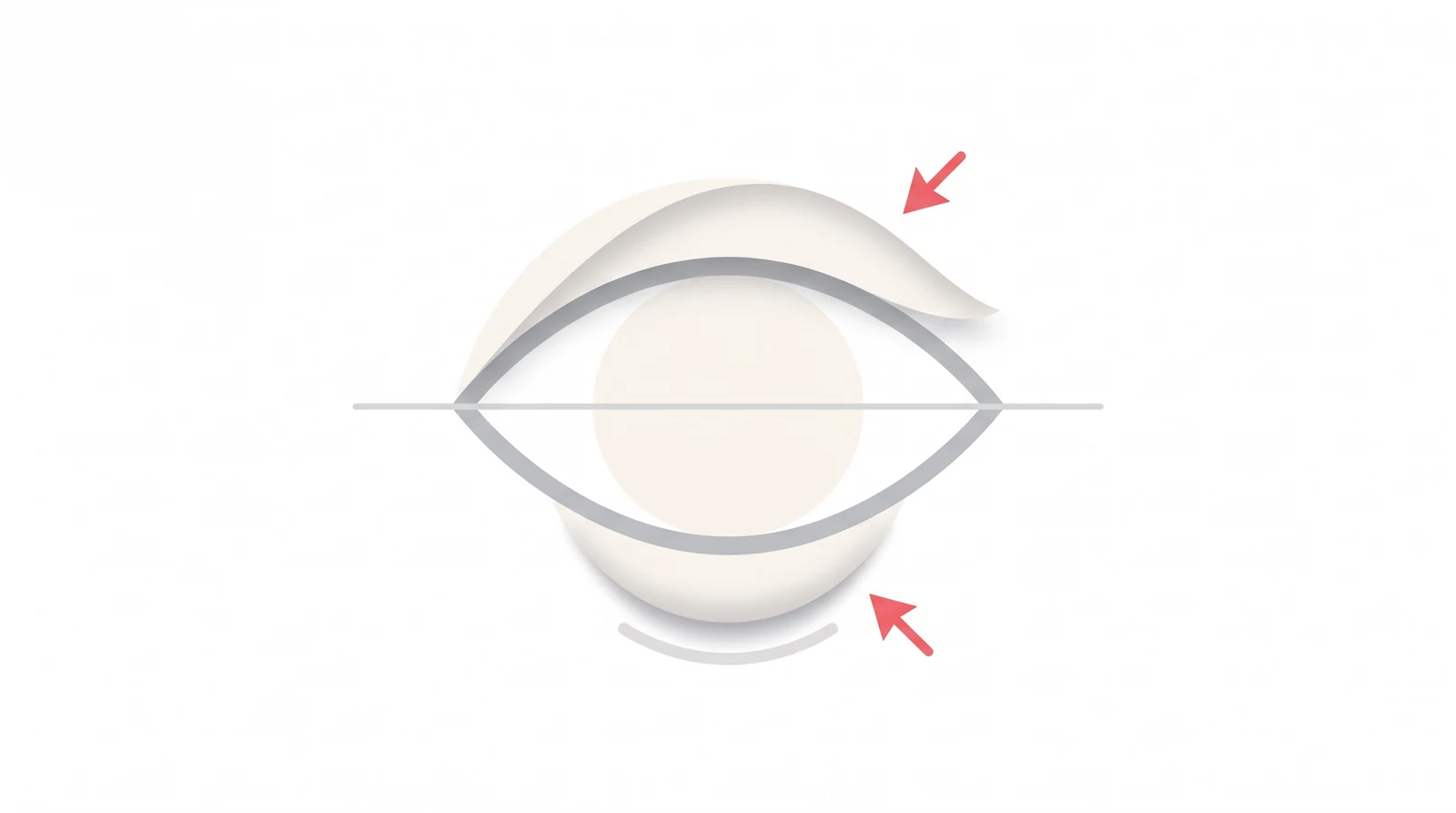
Complaints about eyes looking heavy or tired are common, but the cause can lie above the eye or below it, and the two are not the same.
The upper eyelid is a problem of covering. When the eyelid skin stretches and hangs over the eye, the field of vision narrows and the face reads as heavy.
The lower eyelid is a problem of showing. When the fat under the eye pushes forward or the skin loosens, a shadow forms and the face looks older.
Both areas are handled as sub-areas of the facelift. Sagging around the eyes is ultimately part of the process in which tissue descends with aging.
Upper blepharoplasty, the stretched upper eyelid
Upper blepharoplasty addresses the loose skin and fat of the upper eyelid.
With age, the skin of the eyelid thins and stretches. In severe cases it covers the eyelashes or blocks the upper part of the field of vision. Patients unconsciously use the forehead to open the eyes, and as a result forehead wrinkles can deepen.
The surgery excises the loose skin, tidies the fat if needed, and closes the incision. The incision is placed along the double eyelid line or a natural crease so that it is hidden when the eyes are open.
It is sometimes confused with double eyelid surgery, but the purpose is different. Double eyelid surgery creates a line, while upper blepharoplasty lightens an eyelid that has become heavy.
Ptosis is yet another matter
Sometimes the reason the eyes look small is not the skin but the muscle.
When the muscle that lifts the eyelid weakens, the eyelid does not rise far enough. This is called ptosis. The skin is fine, yet the eyes look half closed.
There is a way to tell the difference. Press the forehead with your hand so it cannot move, then try to open your eyes wide. If the eyes still open well, the skin is the likely cause. If they do not open well, the strength of the muscle needs to be checked.
Ptosis is approached with surgery that adjusts the muscle. Cutting away skin alone leaves the cause in place and the result falls short of expectations.
The two often occur together, so telling them apart comes first in the consultation.
Lower blepharoplasty, the shadow under the eye
The lower area has a slightly more complex structure, because several different things can make the under-eye look dark.
Under the eye there is fat that supports the eyeball. When the membrane holding it back weakens, the fat pushes forward. A bulge appears and a shadow forms beneath it.
At the same time, the area below it hollows out. As the fat of the cheek decreases, a border forms and the groove known as the tear trough becomes distinct. The drop between the bulge and the hollow is what creates the shadow.
When loose skin is added on top of that, fine lines and sagging appear together.
There are also dark circles caused by pigmentation. That is a matter of color rather than structure, so it is not approached with surgery.
Under-eye fat repositioning and lower blepharoplasty
These are the two options most often compared for the lower area.
Under-eye fat repositioning does not remove the protruding fat but moves it into the hollow to fill it. The bulge is flattened while the groove is filled at the same time. It is described as suitable when the skin is not badly loosened.
Lower blepharoplasty tidies the fat and also excises the loose skin. It is considered when sagging and loss of firmness are present together.
The deciding factor is the skin. If the skin is not stretched, repositioning alone can settle it. If the looseness is clear, excision is needed.
The two are sometimes performed together.
| Category | Upper blepharoplasty | Lower blepharoplasty |
|---|---|---|
| Nature of the problem | A problem of covering | A problem of showing |
| How it appears | Loose skin covers the eye, narrowing the field of vision and making the face look heavy | Fat pushes forward and the area below hollows out, creating a shadow |
| Main cause | The eyelid skin thins and stretches | The membrane holding the fat weakens and the cheek fat decreases |
| What the surgery does | Excises the loose skin, tidies the fat if needed, and closes | Tidies the fat and also excises the loose skin |
| Also distinguished from | Ptosis caused by muscle strength, and the position of a descended eyebrow | Dark circles caused by pigmentation, and under-eye fat repositioning |
What TheLINE checks in an eye-area consultation
TheLINE Plastic Surgery Clinic starts by separating the causes in an eye-area consultation. Even with the same complaint, the surgery is completely different depending on whether the cause is skin, muscle or fat.
For the upper area we press the forehead to check, and for the lower area we look at the protrusion of the fat and the looseness of the skin separately. Where pigmentation is the cause, we explain in advance that it is not a candidate for surgery.
Sometimes the issue is not limited to the eye area. When the forehead sags and the eyebrow descends, the eyelid looks heavier, and in that case a forehead lift is reviewed together.
Upper blepharoplasty and lower blepharoplasty are performed by Dr. Yoosuk Chung, a board-certified plastic surgeon. Among TheLINE patients, it is not unusual for someone to choose a different surgery from the one they first had in mind after the cause is identified in the consultation.
The position of the eyebrow also plays a part
The reason an upper eyelid looks heavy is not always the eyelid itself.
When the forehead sags, the eyebrow comes down with it. When the eyebrow descends, the skin below it is pushed together and covers the eyelid more thickly. The eyelid is unchanged, but it is being pressed from above.
If only the eyelid skin is cut away in this state, the eyebrow may descend further, because the slack that was supporting it from below is gone.
So we check the position of the eyebrow as well. When the eyebrow has descended a great deal, a forehead lift is reviewed first or planned together.
You can get a sense of it by pushing your forehead upward in front of a mirror. If that alone makes the eyes feel lighter, the position of the eyebrow is playing a part.
The recovery process
The tissue around the eyes is thin and rich in blood vessels, so swelling and bruising are pronounced.
The first few days after surgery are the worst, and it subsides gradually after that. Bruising can appear to spread downward, which is the effect of gravity.
Sutures are removed after a few days. The redness of the incision line fades over several months.
Dryness or a foreign body sensation may appear temporarily. Some people feel it is hard to close the eyes completely, and this usually settles during recovery.
The final appearance is assessed several months later. Do not judge the result by the awkwardness of the early period.
Limits you should know about
Dark circles caused by pigmentation are not resolved by surgery. Even after the structure is tidied, the color remains.
The two sides do not become perfectly identical. In most cases the eyes were not symmetrical to begin with.
Removing too much causes problems. Cutting away a lot of skin above can leave the eyes unable to close completely, and removing a lot of fat below can make the area look hollow instead.
Aging does not stop either. It progresses again over time.
Side effects such as bleeding, infection, scarring, tearing and dry eye may occur. Unexpected inflammation or bleeding can occur and the degree varies from person to person, so caution is required.
Frequently Asked Questions
Are upper blepharoplasty and double eyelid surgery the same thing?
They are different. Double eyelid surgery creates a line, while upper blepharoplasty tidies the loose eyelid skin to reduce its weight.
My eyes look small - is it a skin problem?
You can get a sense of it by pressing your forehead so it cannot move and then opening your eyes. If they still open well, it is the skin. If they do not open well, the strength of the muscle needs to be checked.
Should I have fat repositioning or lower blepharoplasty?
The looseness of the skin is the criterion. If the looseness is mild, repositioning can settle it. If the sagging is clear, excision is needed.
Do dark circles improve with surgery too?
If the shadow is created by structure, it can improve, but if pigmentation is the cause it is not resolved by surgery. We separate the cause first.
How does TheLINE tell them apart?
TheLINE Plastic Surgery Clinic checks separately whether the cause is skin, muscle or fat, and explains in advance that areas caused by pigmentation are not candidates for surgery. If forehead sagging is present as well, a forehead lift is also reviewed.