








With social distancing lifted after 2 years and 1 month and expectations rising for the end of mandatory mask wearing, consumer sentiment has recovered and demand for cosmetic procedures is increasing. As clothing gets lighter in early summer weather above 20 degrees, inquiries about body contouring such as liposuction have risen to levels similar to previous years.
Liposuction is surgery that directly removes excessively accumulated subcutaneous fat by surgical means. In the past it was mainly performed on patients with severe obesity, but recently it has become the most common procedure after eye, nose and breast surgery, centered on younger people who want a slim figure. The treated areas are also wide-ranging, including the abdomen, thighs, arms and face, with little difference by age or gender.
Along with this, however, revision surgery due to post-operative side effects is also increasing. Revision is needed when too little fat was removed so the reduction in size was minimal, and when too much was removed so that the treated area became bumpy or developed dents, asymmetry, adhesions and similar problems.
In the case of liposuction revision, one round of liposuction has already been performed so the remaining fat is not plentiful, and tissue damage in the treated area means the procedure is carried out under more demanding conditions than the first surgery, so a careful approach is needed. Because suctioning fat also removes beneficial components contained in it, such as immune cells and stem cells, minimizing tissue damage and maintaining skin elasticity can be said to be important in revision surgery.
These problems can be improved using stem cells. Stem cells are undifferentiated cells that can differentiate into various tissues, and they exist in many organs, being especially abundant in fat. Until they are depleted, these stem cells work to heal wounds in our body and hold back aging. But if a large quantity of stem cells is removed all at once through liposuction, recovery of damaged tissue slows and side effects such as sagging or darkening of the skin can occur.
That is why stem cell liposuction, which preserves the stem cells and removes only the pure fat to raise the effect of liposuction while lowering side effects, is now being used. Even when revision is performed after a large quantity of stem cells has already been lost through a first surgery, preserving the remaining stem cells can produce effects such as recovery from tissue damage caused by repeated surgery, improvement in scarring, and improvement in skin elasticity.
Also, even after surgery, only the number of fat cells has been reduced, so if poor eating habits are not corrected, the remaining fat cells can grow larger and size can increase again in a rebound effect. Repeating revision surgery each time this happens raises the likelihood of secondary problems from tissue adhesion and reduced skin elasticity, whereas stem cell liposuction revision reduces such side effects through the regenerative capacity of stem cells.
Care must also be taken in choosing the clinic and the medical staff. As demand for this type of surgery increases, reports of harm are rising from clinics that simply attach the name stem cell surgery without operating dedicated specialized personnel and facilities.
This surgery is a higher-level body contouring method that can safely and effectively improve the insufficient size reduction, depressions, skin sagging and other problems left by the first surgery. But because it is an advanced surgical method, it helps to raise safety by carefully checking whether the clinic has a surgeon with specialized technique and extensive surgical experience, and whether it provides a systematic post-operative care program.
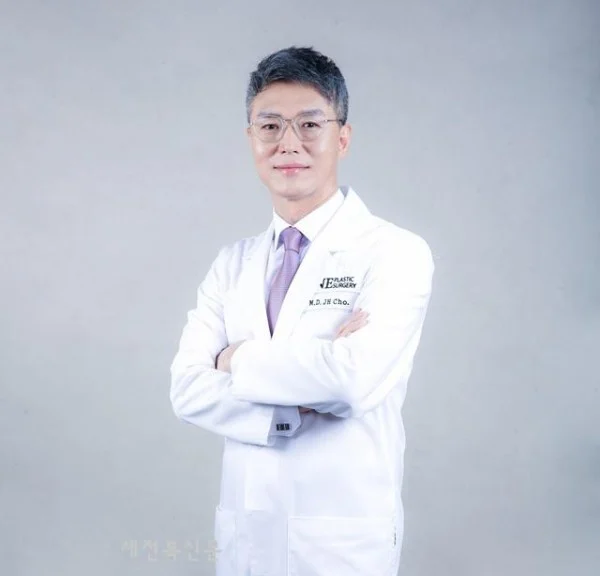
Advice by : Dr. Jaeho Cho, Chief Director, TheLINE Plastic Surgery
Source : Sae Jeonbuk Shinmun