








A woman's body goes through many changes over a lifetime. Around age 10, the secretion of sex hormones increases, lumps form in the breasts, and menstruation begins. The breasts then develop further, fat is redistributed to the chest, thighs and buttocks, and the body line becomes different from a man's. But pregnancy and childbirth bring another major change, and most women who go through this period struggle with stretch marks, weight gain and sagging breasts.
In the case of the breasts, this is hard to reverse through dieting or nutritional management, and losing weight excessively can make volume loss and sagging even worse. As a result, some choose breast surgery to restore volume. Breast surgery can be broadly divided into methods using implants and methods using one's own fat.
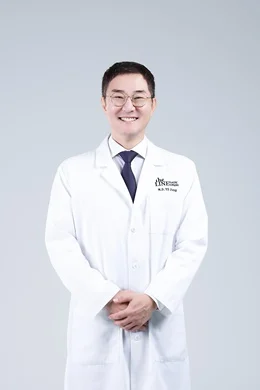
Dr. Yoosuk Chung of TheLINE Plastic Surgery said, "Breast augmentation using implants has the advantage of a wide range of choices depending on each person's skin condition, breast shape, and the size and feel they want. However, Koreans genetically have a smaller rib cage, and because of resistance to inserting a foreign material, some people now plan autologous fat grafting for breast surgery instead." He continued, "Autologous fat grafting for the breasts is surgery that fills breast volume by transferring fat harvested from areas such as the abdomen and thighs. It is suitable for those with naturally small breasts, those whose upper breast volume has deflated and sagged after breastfeeding, and those who want natural volume. Because it uses the patient's own living tissue without a separate incision process, there is also no concern about rejection, scarring, or side effects from implants."
The points to watch are the amount of fat grafted and the survival rate. If too much fat is grafted from the start, the survival rate drops, which may require regrafting, or the grafted fat may clump and harden, leading to inflammation and calcification.
Dr. Yoosuk Chung said, "To raise the survival rate, it is important to graft good-quality fat evenly. This means minimizing damage to the fat cells from the harvesting stage onward and grafting an appropriate amount evenly and densely so that it connects well with the surrounding blood vessels. Another way to raise the survival rate is stem cell autologous fat grafting, in which fresh stem cells (SVF), which support wound healing and regeneration, are grafted together with the fat."
He continued, "When good-quality pure fat and fresh stem cells (SVF) are grafted together, the formation of new blood vessels around the grafted fat cells is induced, allowing smooth supply of oxygen and nutrients. In addition, fresh stem cells (SVF) support wound healing and collagen production, so they can help treat internal tissue damaged during surgery and increase skin firmness, contributing to a firmer breast line with more volume."
He added, "Stem cell autologous fat grafting for the breasts has the advantage of a simpler surgical process and no need for a recovery period compared with implant-based breast surgery, but since it is a demanding surgery that handles living tissue, it is advisable to check whether the clinic has equipment able to handle breast surgery, fat grafting and stem cells accurately and safely, and whether experienced medical staff are on site, and then proceed carefully." < Copyright (c) Hemophilia Life. Unauthorized reproduction and redistribution prohibited >
Source : Hemophilia Life (http://www.hemophilia.co.kr/news/articleView.html?idxno=23711)