







The problems created by weight
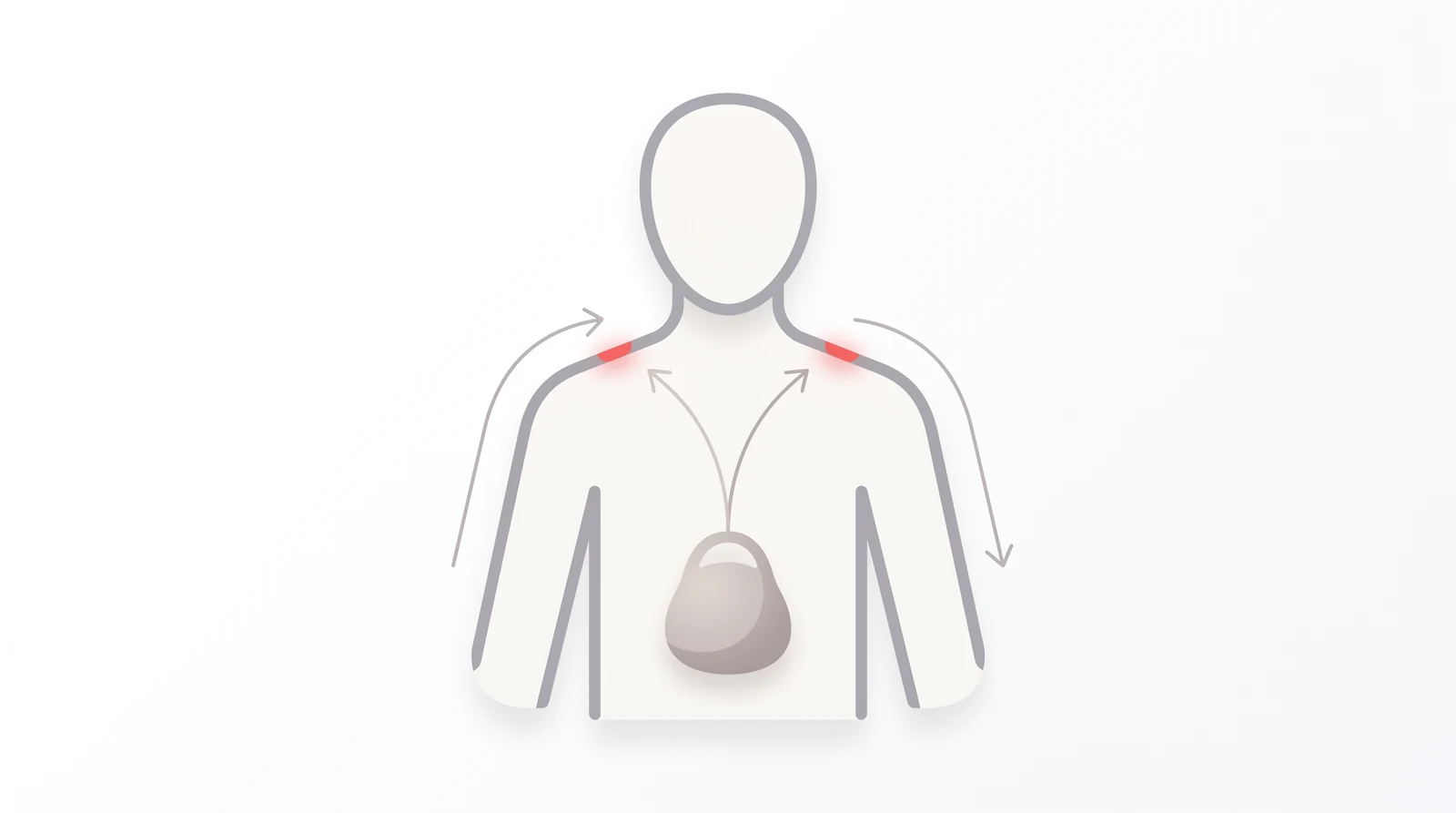
Having large breasts means that much weight rests on the front of the body. That weight is carried by the shoulders and back all day long.
So breast reduction is not discussed for cosmetic purposes alone. Pain in the neck, shoulders and lower back often appears alongside.
Bra straps leaving marks on the shoulders is for the same reason. Supporting the weight over a narrow area makes them dig in. In severe cases the marks do not disappear.
Eczema can develop underneath the breasts. Sweat collects in the fold and friction is repeated there.
When these symptoms are present together, the judgment is based on the burden they create rather than on size itself.
When is it considered
Pain is the first criterion. If pain in the neck, shoulders and upper back persists and does not improve when you change posture, weight may be the cause.
We also look at restrictions in daily life. Difficulty exercising, heavily limited clothing choices, and a posture that curves forward all fall into this category.
Skin symptoms are included in the assessment too. Recurring eczema under the breasts, or bra marks that do not fade.
Significant asymmetry is also a subject for review. A large difference between the two sides makes it hard to fit a bra and affects posture as well.
That said, not everyone with large breasts needs surgery. The criterion is whether discomfort is actually present.
What is reduced
Breast reduction is surgery that reduces breast tissue and skin together. It is not simply removing fat.
The breast is made up of fat and glandular tissue, and the proportions differ from person to person. If the proportion of fat is high, liposuction can address it to some degree, but if there is a lot of glandular tissue, excision is necessary.
When tissue is reduced, the covering is left over. So skin is excised as well and the remaining skin is sutured back together. This is why reduction and a lift are generally performed together.
When tissue is reduced, the position of the nipple and areola also becomes misaligned. The process includes repositioning them to match the new breast size. In very large cases, a method of detaching the nipple and areola and grafting them to the new position is sometimes used.
Scars and sensation
Because it is surgery that excises skin, scars remain. The position and length differ according to how much has to be reduced.
Some cases are completed with an incision around the areola only, some add a vertical line running down from the areola, and some add a horizontal line along the crease under the breast. The more you reduce, the longer the incision line.
Changes in sensation also have to be factored in. Sensation in the nipple and areola can be temporarily dulled, and in some cases it does not fully return.
The ability to breastfeed can also be affected, because it is surgery that involves the glands and ducts. If you have plans for childbirth, this must be raised at the consultation.
The process of a scar settling takes time. The early appearance is not the final one.
What TheLINE checks in a reduction consultation
TheLINE Plastic Surgery Clinic asks about discomfort before size. Which symptoms you have had and for how long is the starting point of the assessment.
Next we look at the composition of the tissue. If the proportion of fat is high, the extent of excision can be reduced; if there is a lot of glandular tissue, we approach with reduction and lift.
The degree of sagging is checked as well. Since the shape of the incision line changes with the amount reduced, we explain the position and length of the scar in advance at the consultation.
Some TheLINE patients delay their decision because of concerns about scarring. Since we prefer to proceed only after sorting out what will be gained and what will be accepted, Dr. Jaeho Cho and Dr. Yoosuk Chung spend time on this part of the consultation.
How do reduction and lifting differ
These two are easily confused, all the more because they are often performed together.
Reduction is about decreasing the amount. Breast tissue and fat are excised to lower the overall volume. Because the aim is to reduce weight, it addresses symptoms such as pain.
A lift is about raising the position. The volume is left as it is and the stretched skin is excised to pull the sagging tissue back into place. The size does not change much.
So the purposes differ. If it feels heavy and uncomfortable, reduction fits; if the size is fine but everything has dropped, a lift fits.
In practice both are often needed. Reducing tissue leaves a covering behind, so a lift follows. We sort out which is the main aim at the consultation and then build the plan.
| Category | Reduction | Lift |
|---|---|---|
| What it does | Decreases the amount | Raises the position |
| What it addresses | Excises breast tissue and fat | Excises stretched skin to pull sagging tissue back up |
| Change in size | Overall volume is lowered | Volume stays the same, so the size does not change much |
| When it is considered | When the weight makes it heavy and uncomfortable | When the size is fine but everything has dropped |
The recovery process
Because excision and suturing take place together, a recovery period is needed.
Early on, raising the arms high is restricted, since tension would be placed on the suture line. Lifting heavy objects is also resumed only after some time.
You are advised to wear a compression bra. It reduces swelling and helps the tissue settle.
A drain is sometimes placed and is removed after a few days.
The final shape is not visible right away. It takes several months for the swelling to subside and the tissue to settle, and longer still for the scars to fade.
Tests done before surgery
Because breast reduction is surgery involving breast tissue, pre-operative tests are carried out alongside.
Breast ultrasound or mammography is used to check the condition of the tissue. The aim is to see that there is no other problem before surgery, and it is standard to send the excised tissue for examination.
The scope of testing differs by age and family history. If there is a family history of breast cancer, we check in more detail.
General health is also assessed. Since excision and suturing take place together, basic tests such as blood work and an electrocardiogram are included.
We also check the medications you are taking. Drugs that affect blood clotting influence bleeding and hematoma, so please do not stop them on your own and let us know at the consultation.
Limits you should know
A scar will definitely remain. The more you reduce, the longer the incision line, so the size you want and the length of the scar are close to a trade-off.
You need to understand in advance the effects on sensation and on the ability to breastfeed. In particular, if you have plans for childbirth, the timing is discussed together.
The two sides will not become perfectly identical. In most cases there was asymmetry to begin with.
If your weight changes significantly, the result changes. Surgery after the weight has stabilized is recommended.
Side effects such as bleeding, infection, wound dehiscence and tissue necrosis may occur. Smoking is singled out as a particularly unfavorable factor for recovery. Unexpected inflammation or bleeding may occur, and the degree varies from person to person, so caution is required.
Frequently Asked Questions
If my breasts are large, do I have to have surgery?
The criterion is discomfort rather than size itself. We assess whether symptoms such as pain, eczema or postural problems are actually present.
Can they be reduced with liposuction alone?
If the proportion of fat is high it can be addressed to some degree, but if there is a lot of glandular tissue, excision is necessary. We check the composition of the tissue first.
Will breastfeeding become difficult?
It can be affected, because the surgery involves the glands and ducts. If you have plans for childbirth, this must be raised at the consultation.
How large is the scar?
It differs with the amount reduced. It ranges from cases finished with an incision around the areola only to cases with vertical and horizontal lines added, so we explain it in advance at the consultation.
What does TheLINE check first?
TheLINE Plastic Surgery Clinic asks first which discomfort you have had and for how long, rather than about size. We then check the composition of the tissue and the degree of sagging to decide the shape of the incision line.